The Luxury Short-Stay Industry in 2026: What Property Professionals Need to Know
Luxury short stays now occupy a distinct position between residential property and five-star hospitality. For agents, developers, designers and advisers, understanding the sector means looking beyond nightly rates to distribution, operations, regulation and the long-term suitability of each home.
What is the luxury short-stay industry?
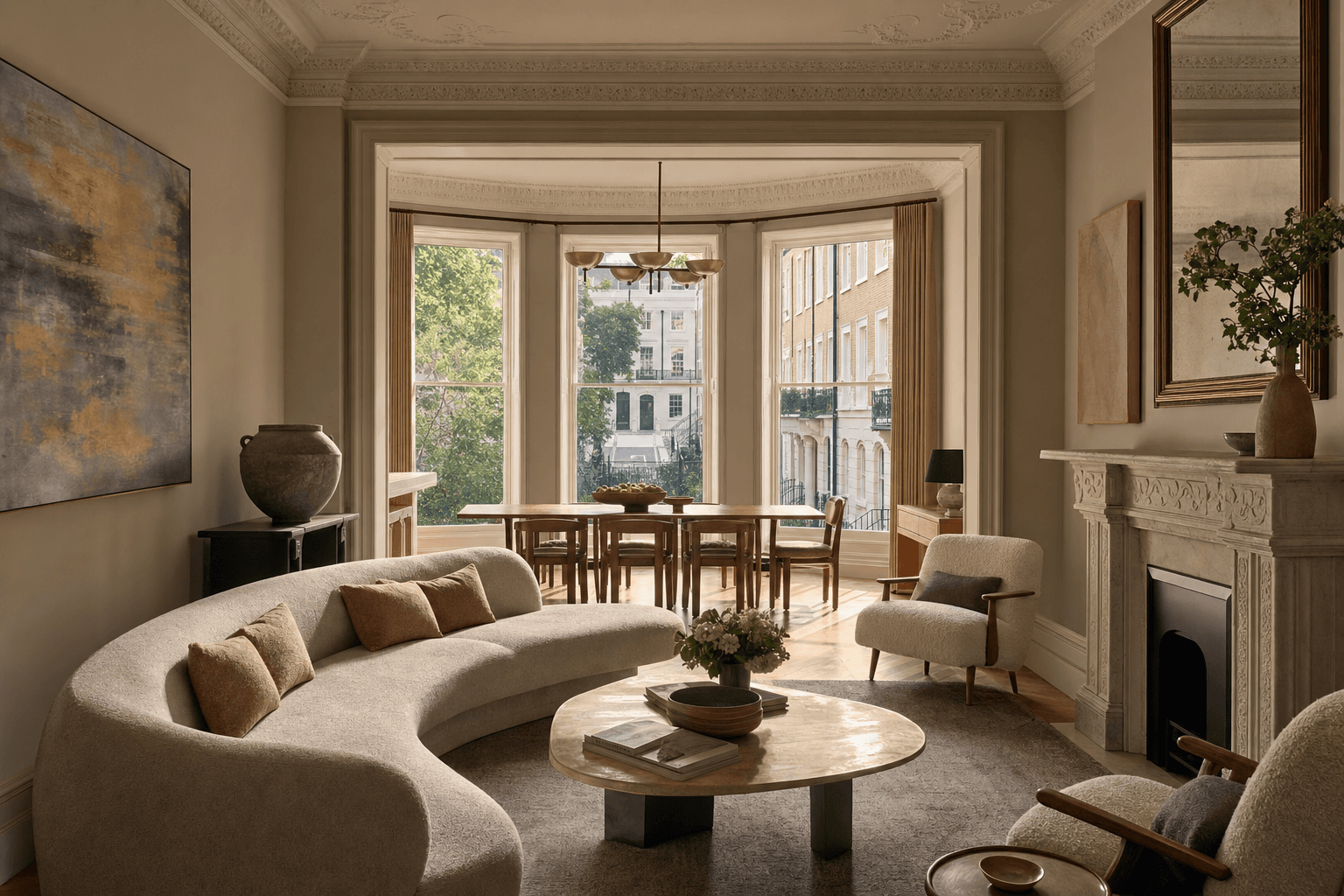
The luxury short-stay industry provides professionally operated houses and apartments for temporary stays, combining the space and privacy of a home with elements of high-end hospitality.
It is not defined by price alone. A credible luxury short-stay home requires an appropriate property, disciplined preparation, accurate marketing, responsive guest service and consistent operating standards. Location and interior design may attract attention, but reliability determines whether the proposition works.
The sector serves several overlapping types of demand:
international and domestic leisure travel
corporate assignments and project work
relocations and insurance stays
family visits and extended holidays
production, fashion and cultural travel
guests who prefer residential privacy to a hotel
This breadth is one reason short stays have become part of the wider accommodation market rather than a marginal alternative to hotels. The UK recorded 100,911,620 guest nights through online collaborative-economy accommodation platforms during 2025, according to the Office for National Statistics. England accounted for 78,428,590 of them. These figures cover the wider short-term rental market, not luxury homes specifically, but they demonstrate the scale of the category. (ons.gov.uk)
Why is the luxury short-stay market changing?
The market is moving from informal hosting towards professional hospitality. At the upper end, guests compare a residence not only with other rentals but with serviced apartments, suites and established hotels.
That comparison raises expectations. Guests may accept that every period property has its idiosyncrasies, but they still expect truthful descriptions, considered arrival instructions, excellent housekeeping, functioning appliances and prompt assistance when something goes wrong.
At the same time, owners are becoming more commercially selective. They want to know how an operator will protect the home, position it, distribute it and manage the practical effects of frequent guest turnover. Property professionals therefore need to assess both guest appeal and operational viability.
Madestays’ content strategy treats owners, property professionals and the hospitality sector as connected groups rather than is stated priority is acquiring suitable homes while building referral relationships with agents, developers, architects, designers and advisers. That reflects how the luxury short-stay industry actually functions: the strongest homes usually emerge from collaboration across the property ecosystem.
What makes a home suitable for luxury short stays?
A valuable address is only the beginning. A home must work as temporary accommodation repeatedly, not merely photograph well on launch day.
Location and demand
Prime London demand is not confined to one central postcode. Mayfair and Knightsbridge serve different journeys from Notting Hill, Marylebone, Chelsea or Hampstead. Proximity to offices, schools, hospitals, parks and transport can be as important as proximity to landmark attractions.
The relevant question is not simply, “Is this an expensive area?” It is, “Which guest has a reason to stay here, and does the home answer that need better than nearby alternatives?”
Layout and daily usability
Bedroom count can dominate initial appraisals, yet circulation and communal space often determine the quality of a longer stay. Families need places to gather and retreat. Corporate groups require workable privacy. International guests may arrive with substantial luggage.
Storage, bathrooms, staircases, natural light and kitchen functionality deserve the same scrutiny as finishes. A beautiful lower-ground bedroom with limited ventilation may not perform like an equivalent room upstairs. A nominally large kitchen may still be awkward for a family if its equipment and dining arrangement are poorly considered.
Operational resilience
Materials must withstand careful but repeated use. Housekeeping teams need practical access. Linen, consumables and maintenance arrangements require secure storage. Heating, hot water, Wi-Fi, locks and appliances must be understandable and serviceable.
These details are rarely visible in a development brochure. They become commercially significant after the first ten stays.
How are luxury short-stay homes marketed and distributed?
Luxury distribution is a portfolio decision, not a matter of publishing one listing and waiting for bookings.
Different channels reach different guest groups. Major platforms offer scale and established booking behaviour. Curated channels can provide additional positioning and audience fit. Direct bookings can strengthen the relationship between operator and guest, particularly for repeat stays, although they require trust, payment infrastructure and effective service.
Madestays distributes suitable prime homes through channels including Airbnb, Airbnb Luxe, Plum Guide, Marriott Homes & Villas, Vrbo and Booking.com, alongside its direct booking site. The purpose of this approach is not to place every property everywhere. It is to select an appropriate channel mix, maintain accurate content and manage availability coherently.
Professional distribution also involves:
market-specific photography and property descriptions
clear amenity and bedroom information
rate and availability coordination
minimum-stay and gap-night controls
channel rules and cancellation policies
enquiry qualification and guest communication
performance review by property, period and source
No channel can compensate indefinitely for an unsuitable home or inconsistent operation. Distribution creates visibility; hospitality converts visibility into a durable reputation.
What role does technology play?
The most useful technology in luxury short stays is often invisible to the guest.
Property management systems, pricing tools, automated workflows and centralised records can reduce avoidable administrative work. They can help teams coordinate calendars, tasks, messages, property knowledge and reporting. Madestays is developing StayTech as its property management platform and StayDNA as a revenue intelligence tool, placing technology within the operating model rather than treating it as a separate novelty.
Automation should not remove judgement from high-value stays. A system may identify a delayed response or scheduling conflict, but a person still needs to understand the consequences for a particular guest and home. The practical objective is to give operators better information and more time for decisions that require context.
For professional partners, this distinction matters. Technology is most credible when it improves consistency, traceability and response, not when it is presented as a substitute for property knowledge.
How is regulation affecting short stays in England and London?
Regulatory readiness is becoming part of professional asset management.
Government guidance published on 25 March 2026 states that a mandatory national registration scheme for short-term lets in England is expected to begin during 2026, although the registration requirement was not yet in force when that guidance was last updated on 15 May 2026. The same guidance directs operators to consider planning permission, insurance, fire safety, gas and electrical safety, accessibility, tax and other responsibilities. (gov.uk)
In Greater London, a home cannot generally be used as short-term holiday accommodation for more than 90 nights in a calendar year without the relevant planning permission. The London Plan expressly notes that exceeding this cumulative limit is unlawful without planning consent. (london.gov.uk)
The position of each property should be assessed individually. Building leases, mortgages, insurance policies, title restrictions and local planning circumstances may impose additional constraints. Property professionals should avoid describing a home as “short-let ready” until the relevant legal and practical questions have been examined.
This article provides general industry commentary and does not constitute legal, tax, investment or financial advice.
Is the outlook for luxury short stays positive?
The opportunity remains substantial, but demand should not be treated as automatic.
VisitBritain’s February 2026 forecast projected 45.5 million inbound UK visits and £35.7 billion of spending during 2026. Its June update subsequently reported that flight data suggested inbound tourism had declined in the second quarter, with summer bookings still lower year on year, particularly for long-haul travel. (visitbritain.org)
For operators and property professionals, the implication is clear: market size does not remove the need for precise positioning. Homes must compete for particular travellers at particular moments. Rate strategy, channel mix, condition and service all matter when demand is uneven.
The strongest part of the luxury short-stay industry is likely to be the professionally managed middle ground between impersonal accommodation and fragile, owner-led hosting. It offers distinctive homes, but supports them with systems, accountability and informed local management.
What does this mean for property professionals?
Agents, developers, designers, architects, relocation specialists and advisers are often in the best position to identify homes with genuine short-stay potential. Their value lies not only in making an introduction, but in recognising suitability early.
A productive operator partnership can help answer questions that sit outside a traditional sale or long-let instruction:
Which guest segment is the home likely to attract?
Does the specification support repeated stays?
What preparation is required before launch?
Which distribution channels are appropriate?
What regulatory or building constraints need investigation?
How should the owner compare short stays with other rental strategies?
The luxury short-stay industry is becoming more exacting, not less accessible. Its next phase will favour homes selected with care and managed as hospitality businesses, while remaining understood as valuable private property.
Work with Madestays
If you advise owners, design prime homes or encounter properties that may suit professionally managed short stays, enquire about the Madestays partner programme and its referral opportunities.